
First off: wow. Really. Rabby made me rethink browser wallets. Whoa! My first impression was skepticism — browser extensions can be leaky. Hmm… something felt off about most of them at first glance. But Rabby kept surprising me in small, practical ways that add up.
I’ll be honest: I’m biased toward tools that solve real UX pain. Short story — Rabby feels like someone who actually uses DeFi built it. At the same time, I’m cautious. Initially I thought it was just another wallet skin, but then realized their focus on account separation and transaction safety is more than cosmetic. Actually, wait—let me rephrase that: the features are practical and aimed at avoiding common user mistakes, not just flashy UI tweaks.
Here’s the thing. Security is not a single checkbox. It’s a stack. You need good cryptography, yes. You also need smart defaults, clear prompts, and a wallet that forces you to think before you click. Rabby nudges you in those directions. Some prompts are subtle and some are obvious. That’s good. My instinct said this is built by people who do DeFi every day, not just designers in an incubator.
Quick example: Rabby separates accounts into profiles so you can isolate funds by purpose. Short-lived accounts for a risky airdrop. Long-term cold storage for big positions. Simple concept. Big win. It reduces blast radius. And because it does that at the extension level, you don’t have to remember to create mental partitions — the tool helps you do it.
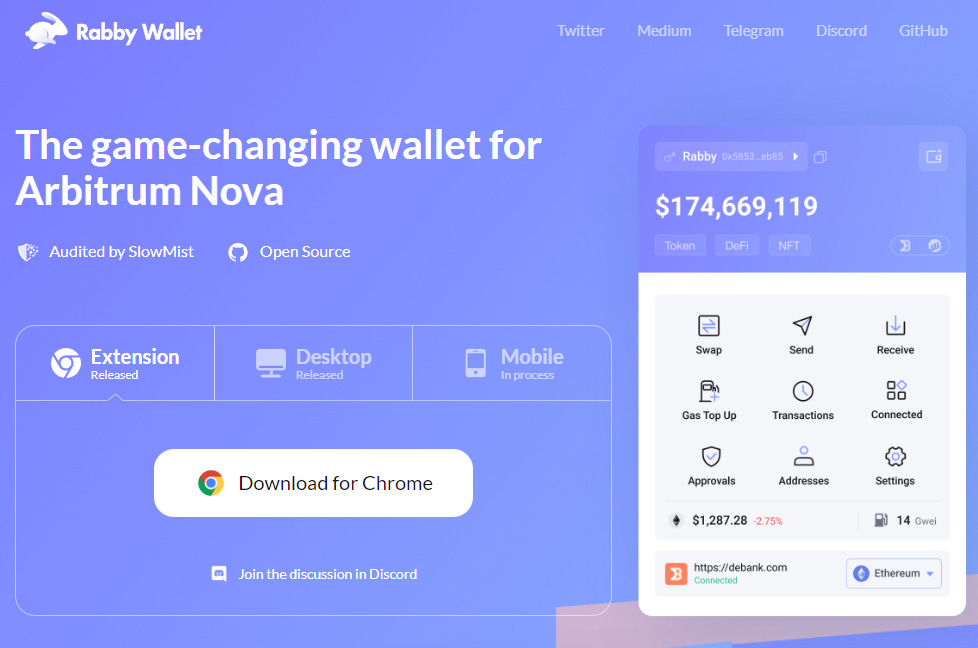
What makes Rabby different — practical details
Okay, so check this out—Rabby adds a few layers that matter. It shows aggregated gas recommendations and labels risky approvals. It warns when a contract wants unlimited token allowance. Seriously? Yes. That one thing alone prevents a lot of token-draining mistakes. On the other hand, no wallet is perfect. There are tradeoffs with UX friction. But I’d rather click more and stay solvent.
Some design choices are subtle but meaningful. For instance, the transaction confirmation flow includes clear visual cues about what you’re signing. That helps prevent blind signing. My experience: when I slowed down, I caught several questionable signature requests that I would have otherwise approved by muscle memory.
Another small bit I like: network management. It’s easy to add testnets or L2s and to see where your assets are. That matters when you’re bridging assets. Bridges can be dangerous. Rabby doesn’t stop bridge scams, of course — nothing can — but it makes the steps clearer, which lowers the chance of a dumb mistake.
Now, about downloads and installation. Always verify the source. Don’t just click some random “download” button. If you want to try Rabby, go here and follow the instructions. Do it from a clean browser profile when possible. I’m not 100% sure every guide online is up to date, so double-check versions and signatures if you can.
My process when testing a new wallet: I start in a throwaway browser profile with tiny funds. I try to sign every kind of transaction I might use. I mimic typical attacks: malicious approvals, phishing overlays, fake contract calls. That routine has saved me from more than one scrape. You can and should do the same. It’s tedious, but worth it.
On privacy: Rabby does less heavy telemetry than many alternatives. Good. But remember that any extension with RPC access can leak metadata via the nodes you use. So use private RPC endpoints or reputable public ones. Also mix in a hardware wallet for big funds. I’m biased toward using a hardware device as the root of trust. Still, hardware is not invincible; it’s just higher-tier risk management.
Here are a few practical tips I follow. Short list. 1) Use account separation for risky experiments. 2) Never approve unlimited allowances unless you absolutely need to. 3) Keep a hardware wallet for larger positions. 4) Test new dApps with tiny amounts first. 5) Keep your browser and extension updated. Simple, but very very effective.
On safety features specifically: transaction simulation and pre-approval checks are key. Rabby integrates with third-party scanners in ways that make the checks visible at a glance. That doesn’t guarantee safety, though. You still must use judgment. On one hand, automated checks remove noise. On the other hand, they can give false comfort. So use them as inputs, not absolutes.
(oh, and by the way…)—watch out for phishing clones. I once saw a fake extension mimic UI labels exactly. I almost clicked through. My gut reaction stopped me. That pause saved me. If something feels off — stop. Close the window. Re-open from a known source. Trust your pause.
Common questions
Is Rabby Wallet safe for large holdings?
Short answer: it helps, but don’t rely on any single extension alone. Use a hardware wallet for large balances. Rabby is a good part of a layered approach that includes cold storage, multisig, and careful operational security.
Can I use Rabby with hardware wallets?
Yes. Use the hardware device as your signing authority. That combination gives you convenience for small trades and strong protection for big ones. It’s the best compromise I’ve found for daily DeFi work.
Where do I download Rabby safely?
Go to the official instructions page available here and follow the guidance. Validate the extension permissions and install from trusted stores. If something in the store looks tampered with, pause and verify.
Final thought: wallets are tools, not gods. They can be engineered to reduce errors, and Rabby does that in a very human-focused way. My instinct said use it casually, but after testing, I moved it into my daily toolkit for small trades and experiments. I’m still careful. You should be too. The DeFi space rewards curiosity, but it punishes hurry.
No comment