
When a DeFi transaction fails, the problem is not always the protocol. It may be the wrong network, an unexpected token approval, a contract call that does more than its label suggests, or a price movement that makes a transaction unviable before it is confirmed. A multi-chain wallet sits at the point where those risks become concrete: it turns a user’s intention into a signed instruction for a particular blockchain. That makes it more than a place to store keys, but less than a guarantee of safety. Understanding the distinction is essential for anyone moving between EVM networks and interacting with smart contracts.
“Multi-chain” can sound like one seamless financial system. In practice, each chain has its own state, fees, contracts, and failure modes. A wallet may present them through one interface, but it cannot erase those differences. The useful question is therefore not simply how many networks a wallet supports. It is how clearly it helps you understand what you are authorizing on each one.
A wallet is an authorization layer, not the protocol itself
A wallet manages access to cryptographic keys and uses them to sign transactions. A smart contract, by contrast, is code deployed on a blockchain. A DeFi protocol may consist of several contracts that handle functions such as swapping, lending, or managing liquidity. The wallet helps you send a request to those contracts; it does not independently decide whether the protocol is economically sound or whether its code is free of vulnerabilities.
This division of responsibility is easy to miss because the wallet is the interface most users see. You click a button in an app, a transaction request reaches your wallet, and the wallet asks you to sign. But the signature is the decisive act: it authorizes a specific operation using your account. Depending on the request, that may mean transferring tokens, approving a contract to spend them, or invoking a more complex contract function.
That is why transaction review matters. A confirmation screen is not merely a final “yes” button. It is an opportunity to compare the action presented by the application with the action the wallet can interpret from the transaction data. Better context can help expose a mismatch or an unexpected approval. It cannot make a malicious or compromised protocol trustworthy by itself.
Why one interface does not mean one chain
Ethereum and other EVM-compatible networks share important technical conventions, including a common model for executing smart contracts. That compatibility lets wallets and applications support multiple networks with familiar tools. Yet an EVM network is not simply another window onto the same ledger. Assets and contract states are network-specific, and a token with the same name or symbol on two chains need not represent the same asset or carry the same assurances.
Network choice therefore changes the meaning of an interaction. A transaction sent on one chain will not automatically execute on another. Even when a bridge is involved, moving value across networks introduces additional contracts, operational dependencies, and risks. A wallet can help users navigate network selection, but the user still needs to check where the asset is and where the intended protocol operates.
The practical consequence is that “I have this token” is an incomplete description. A more useful version is: “I have this token on this network, and this contract on that network is the one I intend to interact with.” That small change in mental model prevents a common category error: treating a familiar asset label or app interface as proof that the underlying destination is correct.
Simulation makes a transaction more legible—but not certain
Transaction simulation attempts to estimate what a proposed transaction would do if executed against a particular view of blockchain state. Depending on the wallet and the transaction, a simulation may help surface likely token movements, approvals, or errors before the user signs. This is valuable because contract calls are not always readable from their technical data alone, and a transaction that looks routine in an app can have consequences worth inspecting.
But a simulation is a forecast of execution, not a guarantee of the eventual result. The state can change between simulation and inclusion in a block. A trade may face different prices; a lending position may encounter changed conditions; a transaction may fail because another transaction altered relevant state first. Some behavior may also be difficult to interpret in a concise interface. Simulation improves visibility into a proposed action under stated assumptions. It does not prove the contract is safe, the interface is honest, or the outcome will remain unchanged.
This boundary matters for experienced users too. Familiarity with a protocol can make a user faster, but speed can encourage approvals or contract calls to become routine. A useful habit is to treat each signature as a fresh authorization: check the network, the contract or destination, the assets involved, and whether the action matches the task you meant to perform. If the wallet presents an unexpected result, pause rather than assuming the application’s description is sufficient.
Approvals are a separate decision from a transaction
Many DeFi interactions require a token allowance: permission for a contract to spend a specified amount of a token on your behalf. An allowance can make later interactions smoother, but it is distinct from the swap, deposit, or other action that prompted it. Users may approve spending first and execute the intended operation in a subsequent transaction. The important security question is not only “What am I doing now?” but also “What permission will remain afterward?”
A broad or persistent allowance can be convenient, yet it may leave a contract with more spending authority than the immediate action requires. Reducing permissions can limit exposure, but it can also mean extra transactions, fees, and friction. The right choice depends on the contract, the amount, the user’s tolerance for operational effort, and the tools available for managing allowances. No single approval pattern is optimal for every user or protocol.
This illustrates a broader distinction: transaction safety and account security overlap, but they are not identical. A wallet can help a user inspect and authorize individual actions; the user must still consider what permissions those actions create and how the account’s keys are protected. A well-presented transaction can still interact with a risky contract, while a reputable protocol cannot prevent every mistake in network selection or signing.
A practical review framework for DeFi interactions
Before signing, separate the decision into four checks. First, confirm the network: is the account on the chain where the intended protocol and asset reside? Second, identify the target: does the transaction go to the expected contract or recipient? Third, inspect the effect: what assets might leave, arrive, or become spendable? Fourth, consider the time horizon: is this a one-time operation, or does it create an authorization that persists?
This framework is deliberately modest. It does not replace protocol research, independent contract review, or careful key management. Its value is that it turns a vague “looks right” into a repeatable check at the moment of authorization. For users in the United States who access DeFi through browser applications, that moment is especially consequential: the app’s interface, the wallet’s interpretation, and the blockchain’s eventual execution are separate layers, and errors can occur between them.
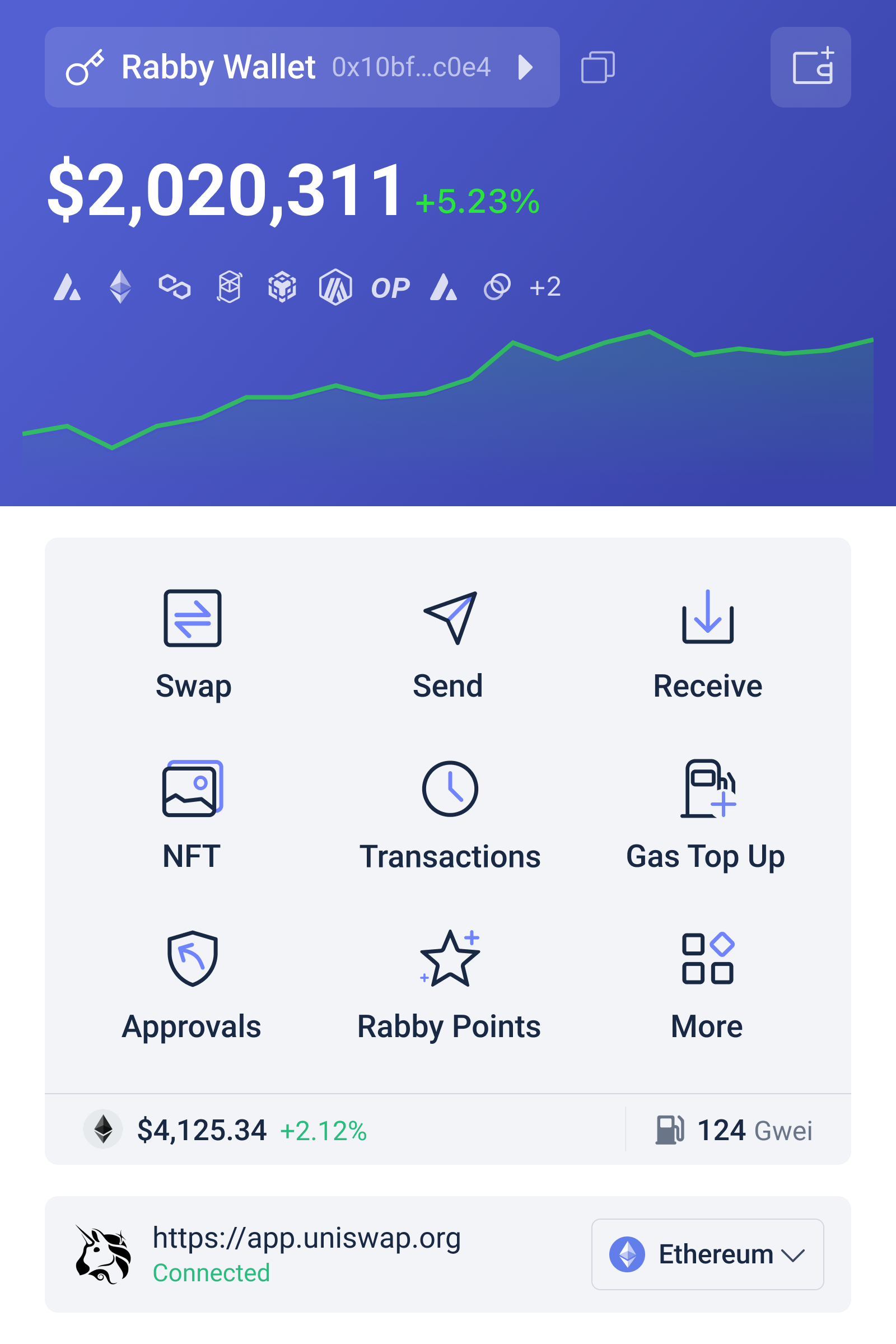
Rabby’s recent project messaging emphasizes use across Ethereum and EVM chains, with a browser extension available for Chrome and Brave. For a user comparing wallet workflows, the relevant question is not whether a product describes itself as suitable for every EVM chain, but how its actual interface helps make network and transaction details understandable. Readers can explore the wallet here, while independently checking that they are using the intended software and evaluating whether its features fit their own security practices.
What to watch as wallets evolve
As multi-chain use becomes more routine, a useful direction to watch is whether wallets can make cross-network context clearer without suggesting that different chains are interchangeable. Better transaction previews could reduce ambiguity, but more information is useful only when it is accurate, legible, and appropriately qualified. A concise warning that identifies a specific risk may help more than a long list of technical fields a user cannot interpret.
The underlying constraint will remain: wallets observe and present information, while contracts execute according to on-chain rules and changing state. If simulation and transaction interpretation become more capable, users may gain a stronger basis for informed authorization. If interfaces hide uncertainty or encourage users to treat simulations as guarantees, the same features could create misplaced confidence. The best wallet is not the one that removes judgment from DeFi. It is the one that gives users better grounds for exercising it.
Frequently asked questions
Does a multi-chain wallet move assets between networks automatically?
No. A wallet can let you manage accounts and initiate transactions on multiple supported networks, but assets remain associated with the chain where they exist. Moving value between chains generally requires a bridge or another cross-chain mechanism, each with its own process and risks.
Does transaction simulation guarantee that a transaction is safe?
No. Simulation can help estimate how a proposed transaction may execute against a particular state and can make likely effects easier to review. The blockchain state may change before execution, and simulation does not establish that a protocol or contract is secure.
Why should I review token approvals separately?
An approval grants a contract permission to spend tokens, potentially beyond the immediate transaction. Checking the scope and persistence of that permission helps you understand what authority remains after the interaction, rather than focusing only on the action you initiated.
No comment